
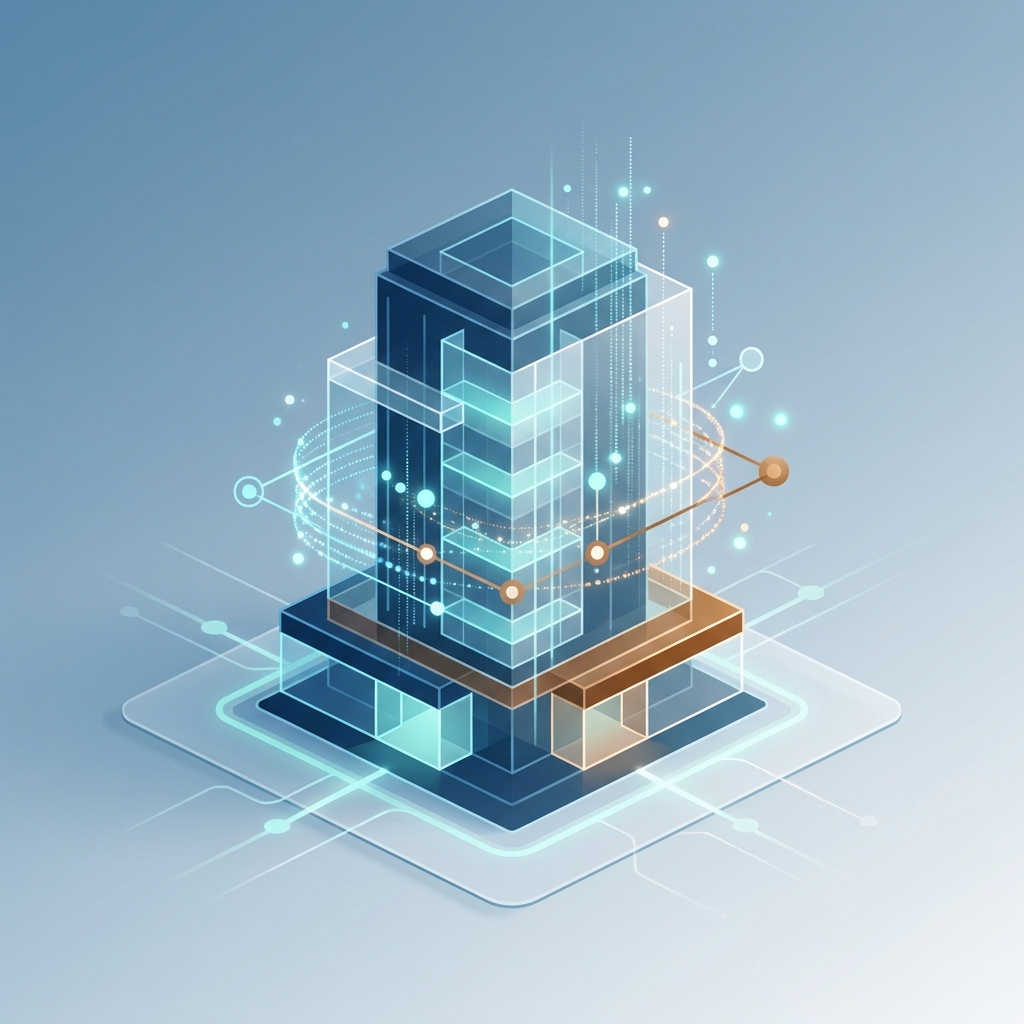
The shift from traditional Building Information Modeling to a fully connected digital twin is one of the most significant advances in architecture, engineering, and construction today. While BIM has long served as the standard for creating detailed 3D models of buildings and infrastructure, pairing that model with real-time sensor data, IoT devices, and operational analytics transforms it into a BIM digital twin—a living virtual replica that mirrors its physical counterpart and evolves alongside it. This move from static modeling to dynamic simulation is reshaping how owners, operators, and designers interact with the built environment. For a broader view of where these technologies are heading, the AssoBIM overview of Digital Twin beyond BIM provides a useful industry perspective.
What Makes Digital Twins Different from Traditional BIM?
At its core, traditional BIM provides a centralized repository of geometric and semantic information about a facility—walls, pipes, electrical systems, materials, and schedules. It is an invaluable tool for coordination during design and construction. However, once the building is handed over, the BIM model often becomes a static “as-built” record that gathers digital dust.
Digital twins take this concept several steps further. They incorporate live data streams from sensors embedded in the physical asset—temperature readings, energy consumption, occupancy levels, structural stress, and more. This continuous feedback loop allows the digital twin to reflect the current state of the building in near real time. Where BIM answers “what was designed,” a digital twin answers “what is happening right now” and “what will likely happen next.”
The Technical Foundation of BIM and Digital Twin Integration
To unlock the full potential, organizations must first have a mature BIM workflow. This means using common data environments (CDEs), standardized classification systems like IFC or COBie, and well-defined level of development (LOD) specifications. From this foundation, the next step is integrating BIM models with IoT platforms, cloud computing, and data analytics engines.
A typical architecture involves:
- A BIM authoring tool (e.g., Revit, ArchiCAD) producing the base model.
- An IoT middleware that ingests sensor data from the field.
- A digital twin platform (e.g., Autodesk Tandem, Azure Digital Twins, Bentley iTwin) that fuses the static BIM geometry with live data.
- Visualization and simulation tools to analyze performance, run “what-if” scenarios, and trigger automated actions.
For example, if a temperature sensor in a data center exceeds a threshold, the digital twin can query the BIM model to identify the nearest cooling unit, check its maintenance history, and simulate the impact of rerouting airflow—all before an engineer arrives on site.
Practical Benefits for Owners and Operators
Moving from static BIM into the realm of connected digital twins delivers tangible advantages throughout the asset lifecycle. If you are exploring how these and other emerging tools fit together, our article on emerging digital technologies from design to construction offers helpful context.
Enhanced Operational Efficiency
Building operators gain real-time visibility into system performance. A digital twin can automatically detect anomalies—such as a pump running at higher than normal vibration—and compare them against the design specifications stored in the BIM model. Predictive maintenance becomes possible, reducing downtime and extending equipment life.
Improved Energy Performance
With live energy data mapped onto the twin, facility managers can simulate the effect of adjusting HVAC setpoints, window shading, or lighting schedules. They can also benchmark actual consumption against the energy model created during design. Studies have shown that buildings using these connected models can reduce energy use by 15% to 30%.
Safer and More Resilient Facilities
Emergency response teams can visualize evacuation routes, locate hazardous materials, and access real-time smoke or fire sensor data. The BIM model provides the spatial context—room dimensions, fire rating of materials, locations of sprinkler heads—while the live sensor feed paints the current picture.
Streamlined Renovations and Retrofits
When planning a retrofit, the digital twin provides a single source of truth that combines as-built geometry with years of operational history. Teams can test renovation scenarios without disrupting occupants, and the updated model becomes the new baseline for future management.
Real-World Applications: Digital Twins in Action
Several leading organizations are already reaping the benefits of BIM-driven digital twins.
Airports like London Heathrow and Singapore Changi use digital twins to manage passenger flow, monitor baggage systems, and coordinate maintenance across massive terminals. The twin helps them simulate crowd patterns during peak hours and test the impact of layout changes before spending a single pound on construction.
Hospitals are deploying digital twins to optimize HVAC for infection control, track equipment location, and predict patient room availability. By linking the BIM model with real-time bed occupancy and air quality sensors, facility teams can reduce energy costs while maintaining strict health standards.
Smart cities such as Singapore’s Virtual Singapore and Helsinki’s 3D city model are entire urban digital twins built upon federated BIM data from thousands of buildings. Urban planners use these twins to simulate traffic, model flood risks, and plan new developments with unprecedented accuracy.
Challenges to Overcome on the Path to Digital Twins
Despite its promise, this transition is not without hurdles.
- Data integration complexity – Combining BIM geometry with streaming IoT data requires robust APIs, data normalization, and often a cultural shift among IT and facilities teams.
- Cost of sensors and connectivity – Retrofitting existing buildings with enough sensors to create a meaningful twin can be expensive. A phased approach is usually necessary.
- Data governance and security – Live building data is sensitive. Organizations must implement strict access controls, encryption, and compliance frameworks.
- Skill gaps – The industry needs professionals who understand both BIM authoring and data analytics. Upskilling current staff or hiring new talent is a common barrier.
The Future: BIM and Digital Twins Converge
As the AEC industry continues to digitize, the boundary between BIM and digital twins will blur. Emerging technologies such as artificial intelligence, edge computing, and 5G connectivity will enable even richer, more autonomous virtual replicas. AI can analyze historical sensor data and BIM parameters to predict equipment failures weeks in advance, automatically ordering replacement parts and scheduling maintenance.
Moreover, digital twins will become “living contracts” that persist across the entire lifecycle—from conceptual design through demolition. Owners will increasingly demand that contractors deliver not just a building, but a fully functional digital twin as the true project deliverable.
By embedding intelligence into every square metre of our built environment, we gain the ability to operate buildings smarter, respond faster to changing conditions, and make data-driven decisions that save money, reduce waste, and improve the human experience. The transition is already underway—is your model ready to come alive?